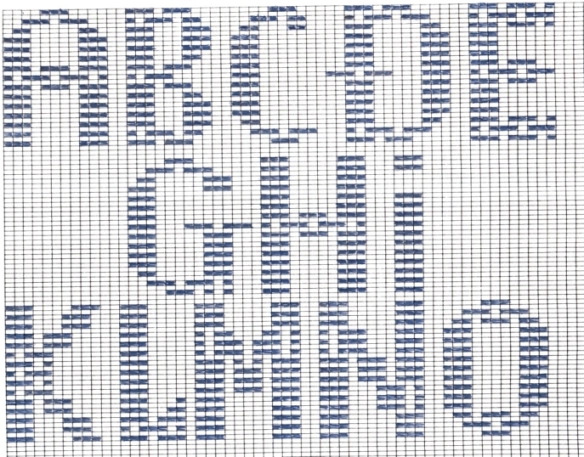
To assume that weaving is similar to the digital revolution seems far out of leftfield, but it is very similar mechanistically. As we discussed in class, information can be used to create order and structure through various applications like symbols, writing, etc. At the end of the 18th century, the silk-weaving industry was born. This was a laborious task, taking hours to days of several individuals weaving by hand to create a uniform pattern. The Jacquard loom changed this dynamic and was the most complex mechanism made by humankind at the time. This loom could be programmed to create any pattern simply by designing a single punch card. This loom took the silk industry by storm, as there was more time to implement progress and promote further development with the catalysis of silk-weaving by this loom. This loom could turn a punch card into a beautiful piece of patterned fabric, much like we use code to create an aesthetically pleasing website full of information. Although the code and website look completely different, they both relay the same message, just as the Jacquard loom did. Now how can one weave their own initials? Well, that would be a similar process the loom! First, one must sketch a pattern of what they want to weave- in this case, initials. A floating warp is used to keep both sides of the cloth intact. Each column on the template represents one warp string, and each row represents a weft string. Based on the color used, you will go over and under the number of spaces that do not contain that color. To weave this fabric, each box is numbered, and this piece fabric is translated from its number of boxes to a beautiful pattern. Happy weaving, and don’t forget that weaving is another form of digital communication!