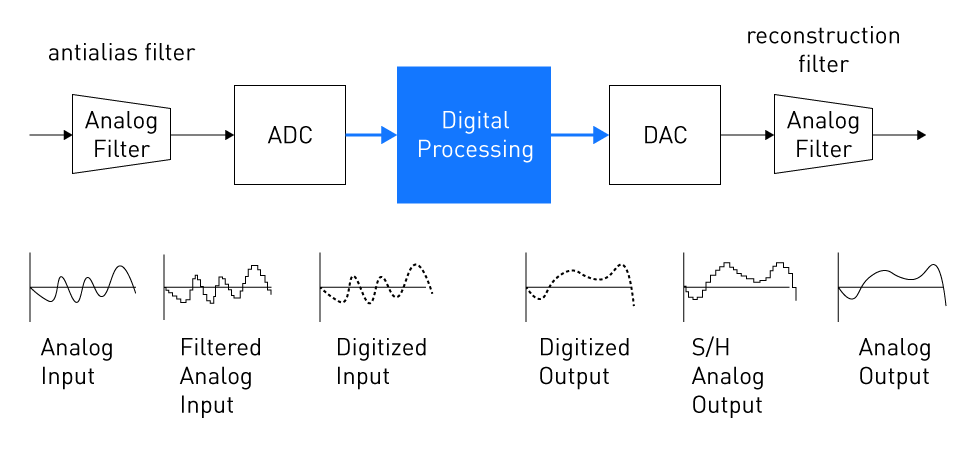
Digitization is the process by which an analog signal which is composed of an endless number of components is transferred to a signal that is discrete, comprised of numbers (primarily 1 and 0), and/or the alphabet. Once example we never even think of is the process of sound; sounds is an analog signal that results in signal combined with noise when, for example, we speak into an oscilloscope. Let’s think of a phone call as it applies to analog converted to digitalization. To be able to hear the other end of a phone call, the sound of our voices must be converted to a digital signal, and then back to analog to hear the voice of the person on the other end. An analog signal which in this case is our voice (sound wave), is converted to a digital signal via an analog-to-digital converter (ADC). Our cell phones can only process digital sound, which calls for this conversion. The sound waves from our voices are then converted to a series of numbers (0,1). These are known as “bits,” or binary digits. These bits are then run through a digital-to-analog converter (DAC), which converts our signal back to analog and allows us to hear each other’s voices with great resolution! The beauty of digitization is the conversion of a signal into numbers/letters that have the same message. Next time you’re on a phone call, remember how your phone is converting the sound of your voice to numbers before the person on the other end can hear you!